If you see tiny, quick roaches in your kitchen or bath, you face roach nymphs. These small roaches soon become a full group if you let them grow. Fast roach nymph control is a must. With smart home steps, you can stop their growth and keep your space safe.
Why roach nymphs are the warning sign
Adult roaches gross many people out. Nymphs, though, show that a colony is near. When you spot nymphs you know that
• Eggs lie near.
• A hidden group already lives there.
• The number of roaches grows fast.
Roach nymphs
• Are small (about 1/8–¼ inch), without wings, and quick.
• Hide in small cracks and tight spots.
• Need food, water, and a safe place to live.
• Shed their skin as they grow into adults.
Killing only adults will not stop the problem. Control must hit eggs, nymphs, and adults. This way, new roaches will not grow back.
Step 1: Confirm you see roach nymphs
Check that these little bugs are roach nymphs. They must not be beetles or bed bugs.
Signs of roach nymphs:
• They have tiny, oval bodies and long antennae.
• Their color is light tan to dark brown, often darker than adults.
• They stay near moisture: under sinks, behind toilets, near dishwashers, and under fridges.
• You might find shed skin or small dark droppings.
If you see both adults and nymphs, you have a group. You need a full roach nymph control plan right away.
Step 2: Cut off food and water
No method will work if roaches find food and water easily. Clean homes are the base of good roach nymph control. Stop food and water from helping roaches grow.
Focus on:
Kitchen and Pantry
• Wipe counters and stoves each night to remove crumbs and grease.
• Sweep and mop floors, especially under appliances.
• Keep food in sealed jars or bags (pet food too).
• Do not leave dirty dishes in the sink overnight.
• Clean crumbs from the toaster and spills in the microwave and oven.
• Empty the trash every day and use a lid that shuts tight.
Bathrooms and Water Spots
• Fix dripping faucets and leaking pipes under sinks.
• Wipe up water that stands in sinks, tubs, and on counters.
• Cover drains or use a fine screen when you can.
• Keep air moving to lower humidity.
By taking away food and water, you make roaches come out. They then take bait and poison faster.
Step 3: Block entry points and hideouts
Roach nymphs can squeeze into cracks as thin as a credit card. A DIY roach nymph plan makes your home hard for them to live in.
Focus on:
• Cracks in walls, baseboards, and around cabinets. Seal these with caulk.
• Gaps around pipes and wires. Use foam or silicone caulk for these spots.
• Spaces under and behind stoves or fridges. Use weather stripping or trim.
• Openings around doors and windows. Seal them to keep bugs out.
This leaves fewer places for roaches to hide or lay egg cases. You then treat a smaller area.
Step 4: Use gel baits as your main tool
For most homes, gel baits work best. They attract both adults and nymphs. With the right use, they can wipe out the group.
How gel baits work:
• Nymphs and adults eat the bait and then go to hide.
• Roaches share the bait in their droppings and by coming back to treated spots.
• Other roaches eat the poison by contact.
• The chain of eating and sharing stops both current and future roaches.
How to use gel baits:
-
Target the right spots.
Place small, pea-sized dots in these zones:• Under sink cabinets.
• Behind and near the stove and fridge.
• Inside cabinet corners and hinges.
• Behind toilets and under bathroom vanities.
• Along cracks where roaches hide. -
Keep bait near but not in the clean zones.
Do not put bait where cleaning can wash it away. Look for dark cracks nearby. -
Place many small dots.
Many tiny dots work better than a few large blobs. They give roaches more chance to eat. -
Keep bait clean.
Do not spray extra poison near it. Extra sprays can stop roaches from eating the bait. Also, do not put bait on greasy or strong-smelling surfaces. -
Refresh bait often.
Check each week. Replace dots that are dry, crusty, or gone until you catch few roaches.
Done well, gel bait is safe for people and works well for roach nymph control.

Step 5: Use growth regulators to stop the life cycle
Insect growth regulators (IGRs) help long-term control. They do not only hit adults. They stop nymphs and eggs from continuing the cycle.
What IGRs do:
• They block molting so nymphs cannot become adults.
• They lower or stop egg production.
• They make surviving roaches weaker and easier to kill by other means.
IGRs come in:
• Sprays: Put along baseboards, under appliances, and in cracks.
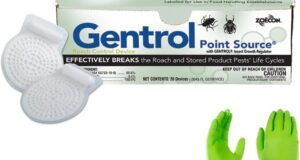
• Small disks or stations: These slowly spread the IGR for many months.
With gel baits, IGRs help stop young roaches from maturing and making new groups.
Step 6: Hit hidden spots with dusts and traps
After using baits and IGRs, use dusts and traps to target roach nymphs and to check progress.
Safe dusts for small cracks:
-
Boric acid powder
• Puff light dust in wall gaps, under machines, and in cracks.
• Roaches walk by, clean themselves, and ingest the dust.
• Works in tight spots where nymphs travel. -
Silica or diatomaceous earth (DE) – food grade
• This dust wears away the wax on roaches.
• Roaches lose water and die.
• Use a very thin layer in dry, dark spots.
Remember: Do not blow dust around living areas. A gentle, small layer in dark spots works best.
Traps for checking and cleaning:
Glue traps cannot end an infestation on their own. But, they help to
• Find busy spots (under the fridge, behind the stove, under sinks).
• Check if nymph and adult counts fall over time.
• Catch stray roaches after most have been killed.
Place glue traps along walls and behind appliances where droppings or nymphs show up.
Step 7: Make a simple home plan
Break the job into weekly steps:
-
Week 1: Attack and set up
• Deep clean the kitchen and baths.
• Seal clear cracks and gaps near pipes.
• Place gel bait in key zones.
• Spray IGR or set IGR stations.
• Dust hidden cracks and gaps.
• Set glue traps to check progress. -
Weeks 2–4: Keep on track
• Refresh gel bait that is dry or eaten away.
• Reapply dust only where it has been disturbed or wet.
• Check traps to see where many nymphs are caught.
• Place bait closer to the new active spots. -
Weeks 4–8: Stop and keep away
• Keep cleaning and remove any water.
• Keep IGR active as per label rules.
• Set a few traps to catch new active roaches.
Most light to medium groups show big drops in two to four weeks with a steady routine.
Natural and low-toxicity options
If you want to use fewer chemicals, you can do that too. It may take more time and care.
Low-toxicity ways:
• Use gel baits that come in child-safe stations.
• Use boric acid and DE. They are safe for people and pets when used as directed, and they kill roaches.
• Stick to traps and cleaning. These non-chemical methods are not to be ignored.
What to skip:
• Heavy use of spray cans or bug bombs.
Such sprays may not reach deep spots.
They can drive roaches into new cracks.
They also miss eggs and young roaches.
The EPA says that mixing cleaning, blocking entries, bait, and spot treatments works best for long-term pest control.
When DIY roach nymph control does not work
Call a bug expert if:
• You see roaches in the light of day (a sign of too many roaches).
• Many nymphs still appear after 6–8 weeks of work.
• You live in a building where neighbors see bugs too.
• You must protect a place with high health needs (like a daycare or busy kitchen).
A bug expert can:
• Use stronger baits and growth regulators.
• Reach wall gaps and deep spots safely.
• Set up a schedule for treatment in large buildings.
Even after a bug expert helps, keep cleaning and sealing your home to stop bugs from coming back.
Stopping future roach nymph outbreaks
After you curb the group, keep your home clean to stop bugs from returning:
• Keep counters and floors free of crumbs and grease.
• Store all food (pet and bird food too) in sealed places.
• Fix leaks and clean up water spots quickly.
• Vacuum walls, baseboards, and behind machines often.
• Check boxes, bags, and used furniture before you bring them in.
• Set a few glue traps in busy spots for early warning.
Think of roach nymph control as a routine task, not a one-time job.
Quick Checklist: DIY roach nymph control
Use this list to guide your work:
[ ] Deep clean the kitchen and baths.
[ ] Fix leaks and remove water spots.
[ ] Seal cracks, gaps, and entry points.
[ ] Place gel bait in many small dots near key spots.
[ ] Use an insect growth regulator (IGR) to stop nymphs from growing.
[ ] Dust with boric acid or DE in hidden cracks.
[ ] Set glue traps to track roach activity.
[ ] Check and refresh weekly for 4–8 weeks.
FAQ: Roach Nymphs and How to Get Rid of Them
-
What kills roach nymphs fast?
A mix of gel bait and an insect growth regulator works fast. Bait kills the roaches, and the growth regulator stops nymphs from turning into adults. Dust like boric acid or DE in tight spots helps, too. -
How do I get rid of baby roaches in my kitchen naturally?
Clean your kitchen well. Remove all food and water. Dust with food-grade diatomaceous earth in cracks and behind machines. Use a light amount of boric acid in hidden areas. Place sticky traps to find where they are most active. -
Why do roach nymphs return after treatment?
Nymphs may keep coming if:
• Egg cases remain and no growth regulator is used.
• Food and water are still available.
• Roaches come from nearby units or outside.
• Only sprays were used, which may miss hidden spots.
Mix cleaning, blocking entries, gel bait, and IGRs to stop new roach groups.
With steady care, good products, and a focus on cleaning and sealing, you can stop roach nymphs, break their cycle, and take back your home quickly.