Cockroach issues grow fast if you kill only the adults and leave the young. A good roach larvicide cuts the cycle by stopping the young from growing into breeders. This guide shows what “larvae” mean for roaches, how larvicides work, and the safe ways to use them in homes, apartments, and shops.
Do Cockroaches Have Larvae? Understanding Their Life Cycle
Cockroaches do not have a “larval” stage like flies or beetles. They go through three main stages:
- Egg (inside an ootheca) – A case that holds many eggs.
- Nymph – Tiny, wingless roaches that look like small adults.
- Adult – The stage that breeds and may have wings.
When people talk about “cockroach larvae” or look for a roach larvicide, they mean products that kill:
- Eggs inside oothecae, and/or
- Nymphs, which are the growing roaches
A good roach plan must hit both nymphs and adults. If you miss the young, the cycle starts again when they mature.
What Is a Roach Larvicide?
A roach larvicide is a product that is meant to do three things:
- Stop eggs from hatching
- Kill new nymphs
- Disturb nymphs so they cannot become adults
These products are also known as insect growth regulators (IGRs). They do not kill on contact. They work by:
- Changing growth hormones
- Stopping normal molting
- Stopping adults from producing young
Used with care, larvicides lower future roach numbers and make baits and traps more powerful.
Types of Roach Larvicides: How They Work
Many products act as larvicides. Some are marked as IGRs. Other sprays and dusts kill nymphs fast.
1. Insect Growth Regulators (IGRs)
IGRs work by stopping nymphs from molting or maturing. Common active ingredients are:
- Hydroprene (for example, in Gentrol)
- Methoprene
- Pyriproxyfen
They work by:
- Acting as if they are juvenile hormones so nymphs cannot molt
- Stopping adults so egg cases break down
- Reducing the number of roaches in a few weeks
IGRs work best on German cockroaches, the most common type indoors.
2. Insecticidal Dusts
Dusts work quickly on nymphs, which lose water fast. Examples include:
- Boric acid – This poison works when roaches eat it during grooming.
- Silica gel or diatomaceous earth (DE) – These damage the outer layer and dry the roaches.
When applied in cracks, wall holes, and under appliances, these dusts work by:
- Killing nymphs as they hide or come out
- Staying active in spots where spray cannot reach
Always use food-grade DE inside and do not use too much.
3. Residual Sprays With Larvicidal Effects
Some sprays kill both adults and nymphs soon after contact. They work by:
- Forming treated paths that nymphs cross
- Cutting the survival of young roaches
These sprays often contain:
- Lambda-cyhalothrin
- Deltamethrin
- Bifenthrin
Follow label steps; some sprays can be unsafe near children or pets when misused.
Why You Must Target Nymphs, Not Just Adults
Killing only adults is like cutting leaves off a weed and leaving the root. With roaches:
- One female and her young can bring many thousands of roaches in a year.
- Egg cases hide in deep cracks where spray never goes.
- Nymphs hide in tight spots and use these spaces to escape traps.
When you use a roach larvicide, you:
- Stop eggs and nymphs from growing
- Prevent more adults from appearing
- Make baits and cleaning work easier
Safe, Proven Roach Larvicide Methods for Home Use
The best roach plans mix larvicides, baits, and cleaning steps. Follow these steps for a roach plan.
Step 1: Inspection and Identification
Before you use any product, do these checks:
- Find spots where roaches live, like kitchens, baths, laundry rooms, and near water sources.
- Look behind or under:
- Refrigerators
- Stoves
- Dishwashers
- Sinks and cabinets
- Note droppings, shed skins, and egg cases.
These hotspots guide where to put larvicides and cut down on waste.
Step 2: Use an IGR as Your Core Roach Larvicide
Select an IGR that is marked safe for roaches. You can use it as:
- Aerosols or sprays in cracks and along baseboards
- Concentrates mixed with water and applied with a sprayer
- Point-source devices that slowly give off IGR
Do these tasks:
- Spray along walls, under appliances, and near cabinets.
- Target moist, warm spots where nymphs hide.
- Reapply as the label states, often every 3–6 months.
IGRs do not work on the spot but help keep roaches at bay in the long run.
Step 3: Combine With Gel Baits for Fast Reduction
While IGRs work for the future, gel baits work to cut the present adult number. Do this:
- Place small dots of bait in corners, under sinks, behind appliances, and near, not in, the nest spots.
- Do not spray directly on or near baits.
- Change bait brands or active ingredients every few months to stop resistance.
The mix of an IGR and bait is a standard way to get rid of roaches.
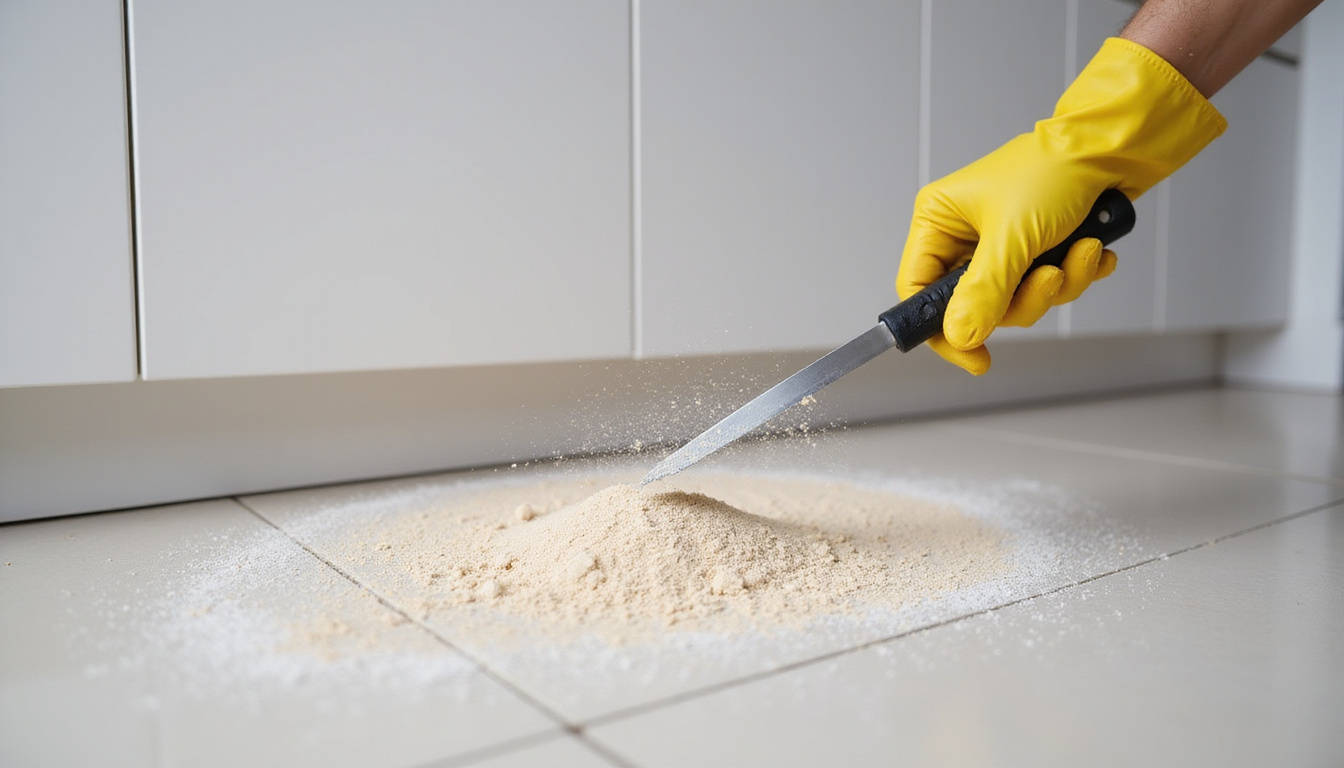
Step 4: Apply Dusts in Voids and Inaccessible Spaces
Dusts work long-term and well in tight spaces. Use them in spots like:
- Behind walls (through outlet covers when safe)
- Under and behind kitchen cabinets
- In cracks and gaps near pipes
- Under large appliances
Remember:
- Spray a very thin layer with a hand duster. A thick pile means too much.
- Keep dust away from food and areas where food is set.
- Do not use pool-grade DE; use only DE meant for pest control indoors.
Safety Tips When Using Roach Larvicides
You must keep safety in every step. Remember these points:
- Read the label; it is your safety guide.
- Keep chemicals in their original bottles with labels on.
- Store products out of reach of kids and pets.
- Let air flow when you spray or use aerosols.
- Keep chemicals away from food, dishes, and toys.
For a safer route, try:
- IGR point-source devices instead of sprays
- Boric acid and silica dust in areas kids or pets cannot reach
- Call a pest expert if roaches do not go away
If you or someone is hurt by a product, call poison control and show them the label.
Natural and Low-Toxicity Larvicide Options
For those who want less toxic ways, try these ideas that still stop the roach young from growing.
1. Boric Acid as a Semi-Natural Roach Larvicide
Boric acid is made in a lab but is low in risk when used right.
- Apply a thin film under appliances and in cracks.
- Roaches hit it, then swallow it when cleaning.
- It works best on small nymphs that groom a lot.
Do not use a thick layer, as it reduces its strength and increases risk.
2. Diatomaceous Earth (DE)
Food-grade DE is a fine dust from tiny fossils.
- It harms the wax on a roach’s body.
- It dries out the roaches, and nymphs die first.
Use it only in closed away spots and avoid breathing it in.
3. Integrated Pest Management (IPM) to Starve Nymphs
IPM helps stop roaches by reducing food, water, and hiding spots for the young.
- Clean food spills soon.
- Seal food in tight containers.
- Fix leaks and dry wet spots.
- Remove clutter like cardboard and loose papers where roaches hide.
Without food and water, nymphs soon die before they grow.
When to Call a Professional for Roach Larvicide Treatment
DIY plans work for small problems. Call an expert when:
- You see roaches each day, even when the sun is out.
- Roaches live in many rooms and on several floors.
- Home rules have not cut the problem after 4–6 weeks.
- You are in a sensitive spot like a restaurant or daycare.
Experts can:
- Use stronger IGRs and baits.
- Reach gaps where home sprays cannot go.
- Set a plan that stops many cycles of roaches.
Quick Checklist: Effective Roach Larvicide Plan
Use this checklist to set your plan:
- Check and find spots where roaches live.
- Put an IGR (roach larvicide) in cracks and rooms with problems.
- Place gel baits where roaches go, away from sprays.
- Dust hiding spots with boric acid or DE.
- Keep clean by removing food and water traces.
- Use sticky traps to see if roach numbers fall.
- Reapply and change products as the label says.
FAQ: Roach Larvicide and Cockroach Nymph Control
Q1: What is the best roach larvicide for apartments?
A blend of an IGR (such as hydroprene) and gel baits works best. IGRs hold back young roaches from growing. Gel baits cut down the adult group fast. Dusts like boric acid add more help in tight spots.
Q2: Are cockroach larvicide sprays safe around pets and kids?
Many sprays are safe if you follow the label. Keep sprays off surfaces where children or pets often go until dry. For extra safety, use IGR devices, gel baits in covered stations, and dusts only where roaches hide.
Q3: How long does roach nymph control take to work?
IGRs and dusts do not work in a flash. You may see fewer roaches in 1–2 weeks. Full results often take 4–6 weeks. Stay with your plan of baits, larvicides, and cleaning until no roaches show up for a few weeks.
By hitting every stage—eggs, nymphs, and adults—with a firm roach larvicide plan, you keep roaches from coming back. This method brings long-term relief in homes, apartments, and shops.