Using insecticidal dust is one good way to stop pests in your home. Dust goes into cracks and small gaps. It works where liquids do not. This guard lasts a long time with less spray inside.
This guide tells what insecticidal dust is, how it works, where to put it, and how to use it safely for long pest control.
What Is Insecticidal Dust?
Insecticidal dust is a fine powder with ingredients that kill or repel pests. Dust works when pests walk on it. The particles stick on their bodies. Pests may then carry dust back to their nests.
Types of insecticidal dust include:
- Drying dusts (like diatomaceous earth and silica gel): They scrape the wax from an insect’s body. The insect dries up and dies.
- Boric acid dusts: They hurt the pest’s gut and nerves when touched or eaten.
- Man-made dusts (such as pyrethroid dusts): They hit the insect’s nerves fast.
Dust stays in cracks and gaps for a long time. It can work well long after you put it on.
Why Use Insecticidal Dust Instead of Sprays?
Dust has strong points that help you choose the best method.
Key points:
- Long-time protection: Dust works for a long time in dry gaps and behind appliances.
- Targeted use: You can put dust in small gaps where pests hide.
- Low smell and low sight: Dust is almost without odor and stays hidden.
- Low pest resistance: Dusts work by touching the pest, so pests find it hard to resist.
- Good for tight spaces: Some dusts, like food-grade diatomaceous earth and boric acid, are a safe pick for indoor use. (Always read the label.)
Sprays work fast and are good for outdoor use. For deep and long control of crawling pests, dust is often the best pick.
Common Pests Controlled by Insecticidal Dust
You can use insecticidal dust for many pests, such as:
- Ants (some live inside walls)
- Cockroaches
- Bed bugs (as part of a bigger plan)
- Fleas in small gaps
- Silverfish and firebrats
- Spiders
- Wasps and hornets in wall gaps or underground
- Carpet beetles and food pests (but not directly on food)
Dust must go where pests live, hide, and move.
Choosing the Right Insecticidal Dust for Your Home
Not all dusts work the same. Pick one that fits your pest type, spot, and safety needs.
1. Diatomaceous Earth (DE)
- Best for: Ants, cockroaches, bed bugs, fleas, silverfish.
- How it works: It scrapes and dries out pests.
- Good points: Food-grade DE is safe for people and pets. It works without chemicals.
- Bad points: It must stay dry to work. Too much can keep pests away instead of killing them.
Use food-grade diatomaceous earth. Do not use pool-grade DE in your home.
2. Boric Acid Dust
- Best for: Cockroaches, ants, silverfish, and some food pests.
- How it works: It harms the gut and nerves when pests eat or touch it.
- Good points: It lasts long and has low vapor.
- Bad points: It can hurt if a lot is swallowed by children or pets. Apply a thin layer in hard-to-reach spots.
The EPA shows that boric acid has been safe indoors for many years if used as directed.
3. Silica Gel / Silica Aerogel Dusts
- Best for: Bed bugs, cockroaches, ants, and other crawlies.
- How it works: It soaks up oils and waxes on insect bodies, causing drying.
- Good points: It lasts long when dry and works in tight gaps.
- Bad points: It may irritate lungs if you breathe it in. Wear proper gear.
4. Synthetic Insecticidal Dusts (e.g., Pyrethroids)
- Best for: Wasps, hornets, ants, cockroaches, and spiders around doors and windows.
- How they work: They hit the pest’s nerves fast.
- Good points: They work fast and leave a strong guard in protected spots.
- Bad points: They are more toxic to water life and some good insects. Follow the label closely.
Where to Apply Insecticidal Dust in Your Home
Placing dust right is key. Too much or the wrong spot makes it less strong or unsafe.
Place dust where pests travel:
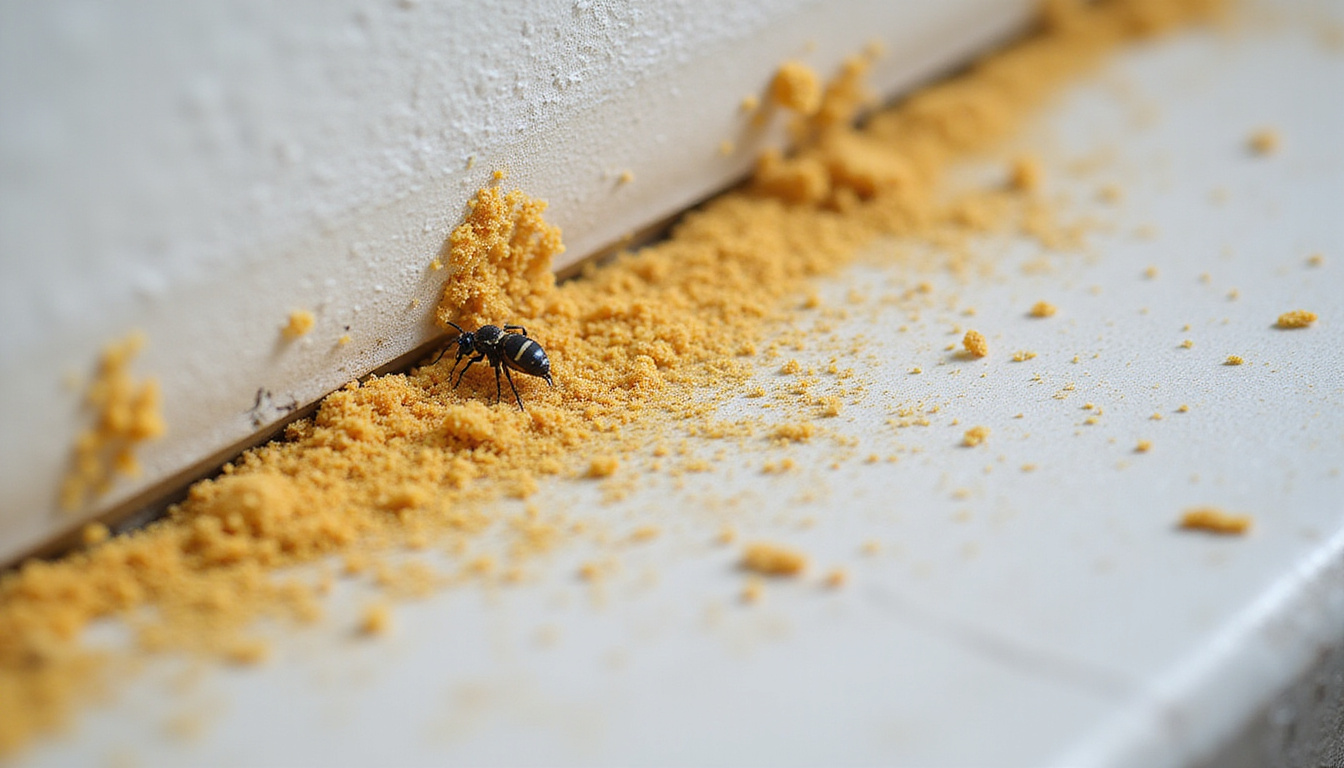
- Cracks in baseboards, floors, and trim
- Behind and under appliances like stoves and refrigerators
- Under sinks and in cabinets, near pipes
- Inside wall gaps, from outlet covers or small drilled spots (only where the label says it is allowed)
- Around pipes and wires that enter walls, floors, or foundations
- In attics, crawl spaces, and basements, near gaps and frames
- Near bathtubs and showers in hidden gaps
- Outside gaps, such as behind siding, in small holes, or near doors and windows
- At wasp or hornet nests in walls or in the ground (use a dust marked for these pests)
The goal is a light, almost unseen film of dust in small zones.
How to Apply Insecticidal Dust Safely and Well
Using dust right is as key as picking the right product. Follow these steps:
1. Read the Label
- Check that the dust is meant for the pest and spot you plan to treat.
- Follow the steps for amount, gear, and time to reenter.
- Never use more than allowed.
2. Use Good Tools
Good tools help you spread dust in a light, even way:
- Hand duster: For small cracks and gaps.
- Air puffer: For even spread in larger spaces.
- Small brush: To work dust into narrow seams or near baseboards.
- Squeeze bottle: Some products come with one.
Do not spread dust by hand or shaking an open container. This is messy and increases the risk of breathing dust.
3. Apply a Light, Even Layer
For insecticidal dust, less is more:
- Aim for a thin, almost unseen layer, not piles.
- Heavy deposits can keep pests from walking on them.
- One or two puffs often work best.
4. Keep Dust Out of Reach
- Put dust only in gaps and places where kids and pets cannot reach.
- Do not place dust on open surfaces where people walk or prepare food.
- Wipe away any dust that reaches open spots after you apply it.
5. Protect Yourself
Even dust with low harm can irritate skin, eyes, and lungs.
Wear at least:
- A dust mask or respirator (fit for small particles)
- Safety glasses or goggles
- Gloves
- Long sleeves and pants
Keep air moving during and after your work, especially in small rooms.
Adding Dust as Part of a Big Pest Plan
Insecticidal dust works best when it is one part of a broader plan.
Mix dust with these steps:
-
Seal gaps
Close cracks around doors, windows, and foundations with caulk. Fix torn screens and gaps around pipes and vents. -
Clean well
Remove crumbs, spills, and grease. Keep food in sealed jars and clean trash often. Cut down clutter where pests hide. -
Control wet spots
Fix any leaky pipes. Use a dehumidifier in damp spots. Keep gutters and downspouts clear to stop water near the house. -
Watch for pests
Use glue traps and look at spots to see if pests come. Reapply dust or change your plan as needed.
Here, insecticidal dust builds a long line of defense in key spots. It works with your sealing, cleaning, and wet control steps.
Step-by-Step: Easy Indoor Use With Insecticidal Dust
Try this simple routine:
-
Find the pest and its path
Look for droppings, shed skins, live insects, or marks near food (for roaches). See where they travel. -
Pick a good dust
For indoor pests, many use diatomaceous earth or boric acid dust. Read and follow the label. -
Get the area ready
Clean surfaces and vacuum well. Move appliances if you must. Check that spots are dry. -
Put dust only in hidden gaps
Lightly dust cracks along baseboards and under cabinets. Use a duster to puff dust into wall gaps (turn off power if needed and if the label says it is allowed). Dust behind appliances, near legs and hidden spots. -
Clean up extra dust
Wipe dust from open surfaces. Leave dust only in hidden spots. -
Check and add more if needed
Watch for pest signs in the following weeks. Add dust only as the product allows.
Frequently Asked Questions About Insecticidal Dust
1. Is insecticidal dust safe around pets and kids?
When you use dust right, it is safe. Dust goes in gaps that kids and pets cannot reach. Safety relies on:
• The product and its main parts
• Where you put the dust
• Following the label
Keep kids and pets away during work. Do not leave dust where they can touch or eat it.
2. How long does insecticidal dust last?
In dry and hidden spots like wall gaps, basements, and under appliances, dust can work for months or years. Wet spots, cleaning, or bumps will lessen its life. Check the label for hints and add dust only if needed.
3. Can I use insecticidal dust outside my home?
Yes. Many products work outdoors, such as:
• Around cracks in the foundation
• In small holes and gaps near pipes
• In gaps under decks or in crawl spaces
Keep dust away from areas where wind or rain may wash it off. Also, be careful not to hurt water or small useful bugs. Follow the outdoor rules on the label.
Using insecticidal dust the right way gives you a strong, long guard against pests. By mixing dust work with good cleaning, sealing, and moisture control, you keep your home safe and pest-free.