Deltamethrin works hard to kill pests. It is found in many homes, gardens, and public health plans. When you use it right, it stops pests and stays safe for people and pets. This guide shows what deltamethrin is, how it works, where to use it, and how to stay safe.
What Is Deltamethrin?
Deltamethrin is a man-made insect killer. It copies natural chemicals from chrysanthemum blooms. It stops many insects. These include:
• Ants
• Cockroaches
• Fleas
• Ticks
• Mosquitoes
• Bed bugs
• Spiders
• Pantry pests
You see deltamethrin in many products. You can find it as:
• Ready-to-use sprays
• Liquid concentrates to mix with water
• Granules for lawns and edges
• Dusts for small cracks and walls
The U.S. Environmental Protection Agency has checked deltamethrin. They say it is allowed when you follow its label (source: U.S. EPA).
How Deltamethrin Works on Insects
Deltamethrin harms insects by affecting their nerves. This makes it work fast and safe.
Mode of Action
Deltamethrin works on the nerve cells. It blocks sodium channels in the nerves. This makes the nerves fire too much. Insects then stop moving and die.
Insects feel this much more than mammals. This is why you need only a little deltamethrin. It stays safe for people when you use it as told.
Residual Action
Deltamethrin stays active on dry surfaces for a long time. It can work for weeks or months. Outside, rain, heat, and sun may shorten the time. Inside, in still places, it may stay longer.
This lasting power is why it works well on outside borders and in small indoor gaps.
Common Uses of Deltamethrin Around the Home
Deltamethrin fits many jobs but not all. Here are the top ways homeowners use it.
1. Indoor Crack-and-Crevice Treatments
Good for: Ants, cockroaches, spiders, silverfish, and stray insects.
You treat small spots. These spots are:
• Along baseboards and molding
• Behind appliances
• Near door and window frames
• In wall gaps and under sinks (if dry)
Use only the mix that says it is for the home. Do not spray open surfaces where people often touch.
2. Perimeter and Foundation Spraying
Good for: Ants, spiders, crickets, roaches, and ground insects.
You use deltamethrin on:
• Outside walls
• Door and window edges
• Points where pipes or wires come in
• Patios, decks, and garages as told on the label
A neat perimeter spray cuts down on pests that try to enter your home.
3. Lawn and Yard Applications
Good for: Fleas, ticks, chinch bugs, and grass pests.
You can use granules or liquid forms on:
• Lawns
• Shrubs
• Garden beds
Follow water instructions well. Often, you must water in the product so it reaches where pests hide.
4. Bed Bug and Flea Control
Some products with deltamethrin work on:
• Bed bugs in cracks or on bed frames (do not use on mattresses unless allowed).
• Fleas, along with pet care and vacuuming.
Since some bed bugs may not break easily, use deltamethrin with other methods instead of alone.
Key Safety Points for Deltamethrin
Deltamethrin is low risk when used right. But no bug spray is free of risk. Use care when you handle it.
For People
Deltamethrin has low risk if used as told. It does not enter much through skin. It is more a skin irritant than a burn hazard.
If you use too much or handle it wrong, you may feel skin or eye irritation. You might feel a tingling on your face or feel sick if you breathe in a lot.
Call a doctor if someone, especially a child, a pregnant person, or a person with breathing problems, shows strong signs of exposure.
For Pets
Deltamethrin is used around dogs in yards and homes. Keep pets away when you apply it. Do not let pets touch wet areas. When the spray is dry and used as told, it is less risky.
Cats feel more of this type of bug spray. Keep cats away from treated spots until everything is dry and the air has cleared.
For the Environment
Deltamethrin can harm fish and water life. To keep water safe:
• Do not spray directly on water or near streams, ponds, or drains.
• Do not spray if rain is heavy.
• Keep the required space from water as the label tells you.
When you use it outside, do not spray on flowering plants that bees visit. Follow any instructions on keeping pollinators safe.
How to Use Deltamethrin Safely and Well
Follow these steps for strong bug control and low risk.
1. Check the Pest
Before you use deltamethrin, see what bug is around. Make sure you need a bug spray. Sometimes cleaning or blocking gaps works well.
Knowing the bug helps you use deltamethrin where it works best.
2. Pick the Right Mix
Choose a product that says it works on the bug you want to stop. Also, check that it works on the place you want to treat.
Forms include:
• Concentrates to mix with water (for more skilled users).
• Ready-to-use sprays (for small jobs).
• Granules (for lawns and edges).
• Dusts (for small hidden spots).
Do not use products meant only for farms or pros in your home.
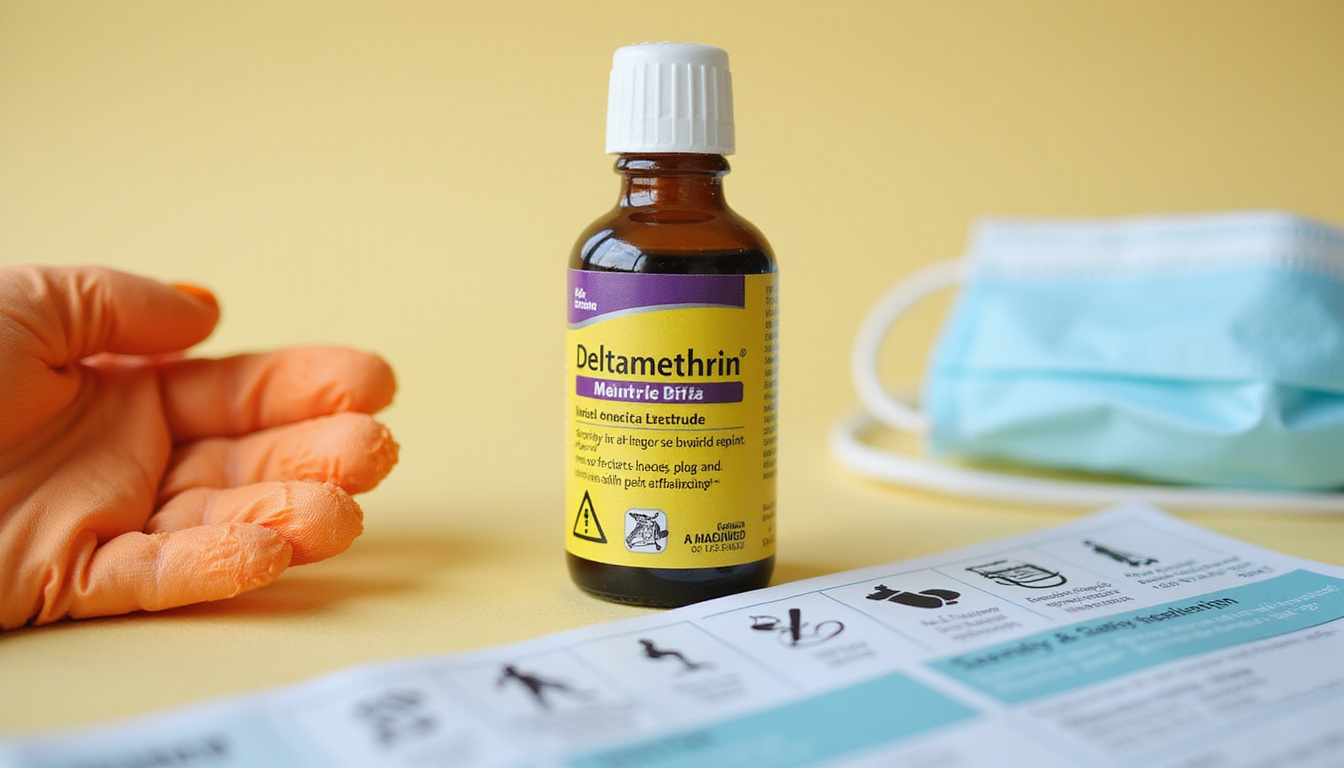
3. Read the Label
The label is your safety guide. Read it all. Look at:
• How to use it and any warnings.
• What gear you need, like gloves.
• How long to keep people and pets out.
• How much to use.
The label tells you where, how, and how much to apply. More spray will not work better and can be harmful.
4. Wear Simple Protection
When you use deltamethrin, wear:
• Gloves that do not let chemicals through.
• Long sleeves and pants.
• Eye protection when you mix or spray above your head.
• A face mask if the area has poor air flow (if the label says so).
Wash your clothes and hands after you finish.
5. Spray on the Right Spots
For good work and low exposure:
• Spray small spots like cracks and known entry points.
• Avoid spraying long stretches of floors, counters, toys, or food areas.
• Use light, even sprays. More spray does not help.
For outside work, spray a band around the home and near spots where bugs hide. Follow the label.
6. Keep People and Pets Away Until Dry
After you spray deltamethrin, stop people and pets from moving in until:
• The area is dry.
• The label’s wait time is over.
• The air moves well indoors.
Dry surfaces let less spray stick to hands or feet.
7. Store and Throw Out Products Right
To keep safe:
• Keep deltamethrin in a locked place.
• Leave it in its original bottle with the label.
• Throw out any left-overs as your local rules say.
Do not pour extra concentrate or wash water down drains unless the label says it is okay.
Mixing Deltamethrin With Other Pest Methods
Deltamethrin works best when you mix bug methods. This plan uses more than one way to stop bugs with low risk.
You can:
• Block gaps and cracks so bugs cannot come in.
• Keep the area clean and dry so bugs do not live there.
• Set traps to see and catch bugs.
• Remove bugs by hand or with a vacuum.
• Use deltamethrin only when the bug count is high.
This mix helps you use less deltamethrin and keeps bugs from getting strong against it. It also cuts cost and helps the earth.
When to Call a Bug Expert
Some jobs need a trained expert. Call help if you see:
• A large or strong roach or ant problem.
• Bed bug spread in many rooms.
• Wood pests that hurt your home.
• People who are at high risk (pregnant, asthma, weak immune).
Experts can tell which bug is in your home. They use more methods and tools. They plan a mix of measures and spray deltamethrin in a safe way.
Quick Safety List for Deltamethrin
Keep this list to check your work:
- Check the bug is one that the spray stops.
- Pick a product for that bug and spot.
- Read the full label before opening the bottle.
- Wear gloves and any gear the label asks for.
- Mix or measure as the label tells you.
- Spray only on the needed spots.
- Keep kids and pets away until dry.
- Let air move in the area if inside.
- Lock up the spray away from kids and pets.
- Throw away extra spray as local rules say.
FAQ: Deltamethrin, Safety, and Other Choices
Q: Is deltamethrin safe for people at home?
A: Yes. When you use deltamethrin as the label says, it is low risk. Do not breathe it in or let it stick to your skin or eyes. Use gloves and spray only where needed.
Q: Is deltamethrin safe for dogs and cats?
A: Most deltamethrin products for homes and yards are safe when dry. Do not spray it on animals unless the label says so. Cats can be more at risk. Keep them away until the spray is dry and the room has fresh air.
Q: Are there natural or less risky choices than deltamethrin?
A: Yes. For some bugs, you can use baits, insect growth chemicals, diatom earth, boric acid, or traps. These can work with small uses of deltamethrin as part of a mix.
Used with care, deltamethrin can cut down on bugs in your home and yard. With the right bug check, small sprays in the right spots, strict label rules, and a strong plan of clean and blocked gaps, you can stop bugs while keeping your family, pets, and earth safe.