Biological Control Strategies Every Gardener Must Use to Defeat Pests
You are tired of spraying chemicals on your plants. Biological control uses living helpers to fight pests. It works with nature and keeps your garden safe. This way, you see less damage and keep pollinators, kids, pets, and the earth safe.
This guide shows real, simple biological control methods for every home gardener. No lab coat is needed.
What Is Biological Control?
Biological control means you use living creatures to cut pest numbers. You do not use man-made poisons. You add or protect:
• Insect eaters
• Tiny wasps that attack pests
• Germs that sicken pests
• Other pests that block the bad ones
In a backyard garden, you invite nature’s helpers and sometimes bring in more when needed.
Compared with broad sprays, biological control:
• Hits the right pest
• Guards against resistance
• Saves friendly bugs and good soil life
• Builds a strong garden
The Three Main Types of Biological Control in the Garden
Know these three big types to pick a method for your garden.
1. Conservation Biological Control
This type saves and grows the natural helpers that already live in your yard.
• Plant flowers for good insects
• Provide tiny homes and safe spots
• Skip the bad chemicals
• Leave some wild spots
This work is simple and key for home gardens.
2. Augmentative Biological Control
This type adds more good helpers to boost nature’s work.
• Buy ladybugs for aphids
• Bring in tiny predators for spider mites
• Use useful roundworms for soil pests
You may add them in small groups early on or in many numbers to stop a pest surge.
3. Classical Biological Control
This type brings helpers from a pest’s home area. Researchers and agencies do this under strict rules so they do not harm local life.
For you, use conservation or augmentative control.
Beneficial Insects: Your First Line of Defense
Many small bugs help fight pests. It is wise to welcome them into your garden.
Ladybugs (Ladybird Beetles)
Targets: aphids, soft bugs, and small larvae.
• Both the grown-up and young bugs eat many aphids.
• One young bug can munch dozens of aphids per day.
Tips:
• Plant flowers like yarrow, dill, fennel, or cosmos to keep ladybugs near.
• If you buy them, let them go at dusk on aphid plants. Mist the leaves so they drink and stay.
Lacewings
Targets: aphids, thrips, whiteflies, small caterpillars, and mite eggs.
• Lacewing young are strong aphid eaters.
• They stick to garden spots better than ladybugs.
Tips:
• Buy lacewing eggs or young bugs. Spread them among plants with pests.
• Invite adult lacewings with nectar plants like alyssum, coriander, and dandelion.
Parasitic Wasps
Targets: caterpillars, aphids, whiteflies, and scale insects.
These tiny wasps do not sting people and work well.
• They put eggs on or in pests.
• Their young eat the pest inside and then the pest dies.
Look for signs:
• Look for aphid bodies that look puffed and tan.
• See caterpillars with white cocoons attached.
Tips:
• Grow small flowers that give sweet nectar like sweet alyssum, dill, fennel, or buckwheat.
• Skip chemicals that kill them fast.
Predatory Mites
Targets: spider mites, some thrips, and small pest mites.
These small arachnids feed on pest mites and leave plants safe.
• They work best in houses or greenhouses.
• They must come in early or when pests start to show.
Tips:
• Order the right kind for your weather.
• Bring them in just when pests first appear.
Beneficial Nematodes and Microbial Controls
Some good helpers work underground or on leaves.
Beneficial Nematodes
Targets: fungus gnat young, grubs, root weevils, cutworms, and some borers.
These tiny worms hunt soil pests.
• They move in the soil to find bad larvae.
• They are safe for people, pets, and most good bugs.
How to use them:
- Pick the right type (for example, one kind for fungus gnats or another for grubs).
- Spray them on wet soil in early morning or near dusk.
- Keep soil damp (but not soaked) for a week so they can work.
Bacillus thuringiensis (Bt)
Bt is a natural soil germ used as a target spray for pests.
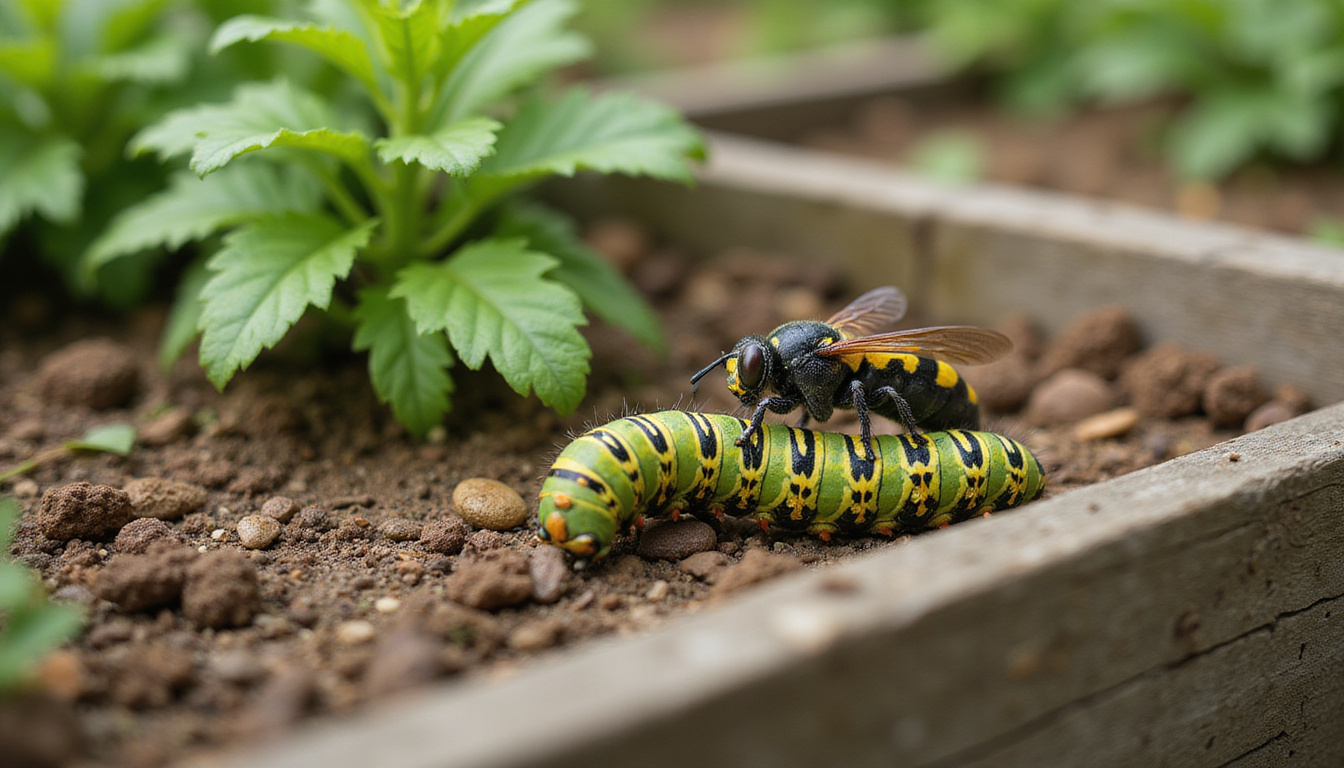
• Bt var. kurstaki helps with caterpillars like cabbage worms and hornworms.
• Bt var. israelensis helps with mosquito and fungus gnat young.
How it works:
• Caterpillars or young pests eat leaves or water with Bt.
• Bt stops their eating and they soon die.
How to do it:
• Spray Btk when caterpillar damage is clear.
• Do it in the evening to keep Bt strong against light.
• Skip spraying when butterfly young are on plants you need.
Habitat Management: Designing a Garden That Fights Pests for You
A strong garden helps nature fight pests by itself.
Grow “Insectary” Plants
These plants give food and shelter to friendly bugs. Plant them among vegetables and flowers.
Good picks:
• Flat-topped flowers like dill, fennel, coriander, or carrot seeds
• Small flowers such as sweet alyssum, yarrow, or buckwheat
• Local wildflowers that suit your climate
These plants feed ladybugs, lacewings, hoverflies, tiny wasps, and more.
Add Structural Diversity
Different helpers like different spots:
• Tall plants or bushes give room for spiders and beetles.
• Ground covers and mulch help beetles on the ground.
• A mix of sun and shade gives many choices for good bugs.
A plain lawn with one flower bed does not give many homes for these helpers.
Provide Water and Shelter
• A shallow dish with stones gives a drink for friendly bugs.
• Piles of sticks, stones, and leaves give safe spots for ground bugs.
• Do not clean away every bit of mess; some wild parts help nature.
How to Use Biological Control Products Safely and Effectively
Treat your living helpers like real friends. Do not think of them as mere products.
1. Identify the Pest Correctly
Wrong ID wastes time and money. Before you buy, do this:
• Look at damage signs like chewed or sucked parts.
• Check the undersides of leaves and stems.
• Use local guides or books to compare.
2. Choose the Right Natural Enemy
Each helper fights only one or two pests. For example:
• For aphids, use ladybugs, lacewings, or tiny wasps.
• For spider mites, pick a type of predatory mite.
• For soil pests, choose nematodes or Bti.
Read the labels and guides to match your pest to the right helper.
3. Time Releases Strategically
Biological control works best when you start early.
• Add helpers as soon as you see pests.
• You may need to add more if problems grow.
• Keep the right soil and air conditions as the label shows.
4. Avoid Harmful Pesticide Interactions
Some sprays kill good bugs:
• Broad sprays (like carbaryl, pyrethroids, or organophosphates) are risky.
• Some poisons that go inside the plant are not kind to helpers.
When you must spray, use:
• Spot treatments
• Short-acting, selective products (like insecticide soap or plant oil)
• Times when helpers are less busy, like in the evening.
Integrated Pest Management and Biological Control
Biological control works best when you mix it with other safe pest steps.
Mix it with:
• Crop care: crop rotation, right spacing, resistant plants, and strong soil
• Hand work: pulling bugs by hand, row covers, traps, or spraying with water
• Cleaning: remove bad, infected leaves or debris
Think of it as a friendly wall:
- Keep plants healthy with good soil and spot planting
- Check your garden each week
- Act early when pests show up
- Treat only when you must
Common Mistakes Gardeners Make with Biological Control
Watch out for these slips:
• Do not count only on buying bugs. Fix plant stress and add a good habitat.
• Do not spray broad poisons and then ask why pests return. This kills helpers.
• Do not add helpers too late when pests are many.
• Do not plant only one type of plant. More types help good bugs once pests fall.
• Do not overfeed plants with high-nitrogen food. Soft, tender growth calls in aphids and more pests.
A Simple Biological Control Plan for Home Gardeners
Try a simple plan:
- Plant 3–5 types of insect-attracting flowers among your veggies and blooms.
- Stop using broad poisons. Use spot sprays with soap or oil if needed.
- Check your garden each week for pests and good bugs.
- Add helpers when you see:
- Clusters of aphids → lacewings or ladybugs
- Spider mites → predatory mites
- Soil pests → nematodes
- Keep a bit of wild space (mulch, small brush piles, flower borders) for helpers all year.
These steps can cut pest trouble in one season.
FAQ on Biological Control in the Garden
1. What is biological pest control and is it safe for home gardens?
Biological control uses living bugs, worms, and microbes to cut pest numbers. When you pick the right kind and heed labels, it stays safe for your garden, friendly bugs, soil life, and pollinators.
2. How do I start using biological insect control if I’m new?
Begin by letting nature work. Plant insect-friendly flowers, skip harsh sprays, and build a space for good bugs. Then, when you see pests, add a helper like predatory mites for spider mites or Bt for caterpillars.
3. Does biological control work as well as chemicals?
Biological control cuts pests over time and builds a steady balance. You may not see a fast fix like chemicals, but you gain a calm and lasting garden with few side effects.
By mixing biological control in your garden care—with the right habitat, good bugs, and regular checks—you fight pests with nature’s small helpers and enjoy a garden that grows strong and healthy.