Finding dark specks on your countertop or inside a cabinet can feel unsettling. They may look like coffee grounds or black pepper. These small marks come from roach droppings. Roaches may hide near your food, and fast action can keep your food, your health, and your calm safe.
This guide tells you how roach droppings appear, what risks they bring, where to search, and how to clean and stop them safely.
What Do Roach Droppings Look Like?
Seeing roach droppings is the first sign of cockroaches near you.
General appearance
Roach droppings often show as:
- Small dark specks
- Marks that look like ground coffee or black pepper
- For tiny roaches, droplets like black dust
- For large roaches, short pellets that are a bit grainy and round at the ends
You might also see smears. When droppings are stepped on or dragged, they leave dark marks. On walls or corners, they may form short streaks.
Size differences by roach type
-
German cockroaches (small and common in kitchens)
Their droppings look like small dots or smears. They are about the size of ground black pepper. You can find them near food, under appliances, in cabinets, or in tight spaces. -
American / Oriental cockroaches (larger species)
Their droppings are bigger. They are about as big as a grain of rice. These droppings take a cylindrical shape with smooth or blunt ends. They may be confused with mouse droppings.
Roach Droppings vs. Mouse Droppings vs. Food Crumbs
Seeing the wrong mark can slow your steps. Here is how to tell each one apart.
-
Roach droppings
- They are very dark and almost black.
- For small roaches: small specks that look like pepper or coffee grounds.
- For large roaches: short cylindrical pellets without sharp ends.
- They often group together or smear on surfaces.
-
Mouse droppings
- They are larger, about 1/8–1/4 inch long.
- They appear like a small grain with a pointed end.
- They sit along walls, in drawers, or near nesting spots.
-
Food crumbs or coffee grounds
- Their colors change (tan, brown, cream) and not all are dark black.
- They are larger and come in different sizes.
- They do not create a dark smear when touched with a damp paper towel.
If you feel unsure, wear gloves. Gently press a droplet with a damp paper towel. Roach droppings will smear dark. Coffee or dry crumbs will break apart.
Common Places to Find Roach Droppings in the Kitchen
Roaches search for food, water, and a place to hide. This makes the kitchen a favorite spot. Look closely in these places:
- Behind and under the refrigerator and stove
- Under the sink, near pipes and wet wood
- Inside and along the edges of kitchen cabinets
- On pantry shelves and where food hides
- Around trash cans, recycling bins, and compost places
- Along baseboards, behind many appliances, and in corners
- In drawer tracks and under spaces for cutlery
- Near dishwashers and washing machines
A busy roach route will show more droppings. Many droppings may show that roaches live nearby or that there is a strong hideout.
Health Risks: Why Roach Droppings Are More Than Just Gross
Roach droppings look bad. They may hurt the air inside and bring health risks.
Allergies and asthma
The U.S. Environmental Protection Agency tells us that roach parts—droppings, shed skins, and saliva—can trigger allergies and asthma. These marks may cause:
- More coughs and wheezing
- More asthma attacks
- A stuffy or runny nose, red or itchy eyes
- Skin rashes in some people
When disturbed, roach droppings can fly as tiny particles and add to indoor dust.
Bacteria and germs
Roaches crawl in many dirty places such as sewers, trash, and drains. Their droppings may move germs onto your kitchen surfaces. Studies show that roaches can bear germs like:
- Salmonella
- E. coli
- Other bugs that cause food poisoning or upset stomach
Not every mark makes you sick, but they raise the chance to spread germs on your food and surfaces.
What Finding Roach Droppings Really Means
Even a small mark should not be left alone. It tells you that:
-
Roaches stay close by.
Roaches leave droppings where they eat and hide. Droppings show that roaches have been near. -
More roaches may be hidden.
Roaches hide well in cracks and behind machines. A few marks might mean many roaches are out of sight. -
An infestation could grow.
Droppings can send a kind of sign to other roaches. They help roaches find food and safe spots.
When to fear a strong infestation
- You see fresh droppings each day in the same spots
- There is a musty, oily, bad smell in cabinets or pantries
- You see live roaches during the day, not only at night
- You find small brown egg cases along with droppings
In hard cases, cleanup by yourself might help. But a pest expert can work faster and with more strength.
How to Clean Roach Droppings Safely (Step-by-Step)
Cleaning roach droppings well is key. It cuts the risk to health and removes smells that may draw more roaches.
Safety first
Before you start, do these steps:
- Wear gloves that you throw away after use
- If you have allergies or asthma, wear a mask
- Open windows or use a fan so that air moves around
Step-by-step removal
-
Do not sweep or vacuum dry at first.
Dry sweeping may stir up allergen dust. If you do use a vacuum, make sure it has a HEPA filter. It is best to wet the area first. -
Wet the droppings lightly.
Use a household cleaner or bleach mix (about 1 tablespoon bleach per quart of water). Let the wet mix sit for a minute. This softens the droppings and helps cut down on dust. -
Wipe with disposable towels.
Use paper towels or a cloth that you throw away. Press and lift instead of scrubbing too hard so the droppings do not spread. -
Rub with disinfectant.
After you remove what you see, clean the area again with disinfectant or hot soapy water. Give extra care to seams, corners, and small cracks. -
Throw away the waste carefully.
Put the used towels, gloves, and any waste in a plastic bag. Seal the bag and throw it in an outside trash bin. -
Wash your hands well.
Even if you wore gloves, wash your hands with soap and warm water for 20 seconds.
Quick Action Tips to Stop New Roach Droppings
Cleaning is only part of the work. If you do not stop the roaches, new droppings will come. Try these steps:
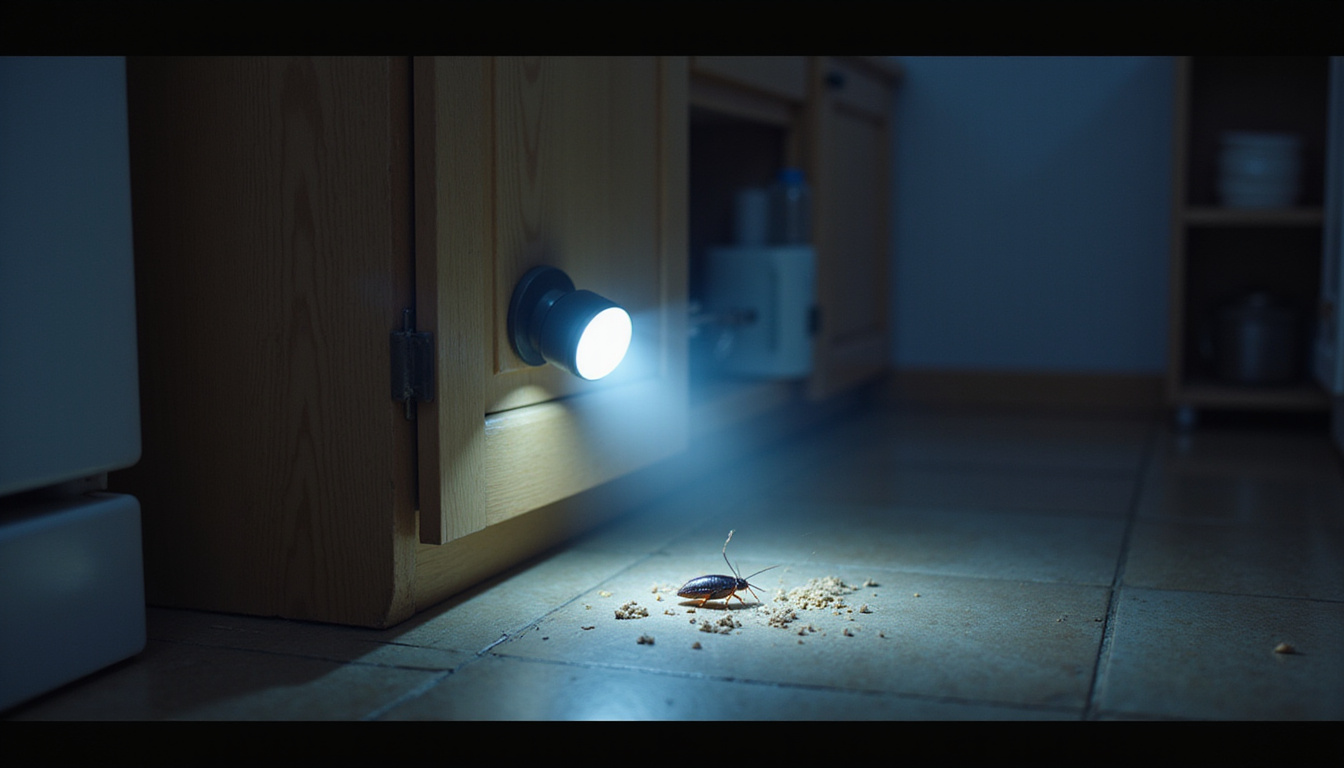
1. Remove food sources
Roaches can live on crumbs, grease, and tiny spills. Make your kitchen hard for roaches:
- Keep food in sealed containers, even pet food
- Wipe counters and stovetops each night
- Do not leave dirty dishes in the sink
- Take out trash each day and use bins that close tight
- Clean under and behind appliances where food hides
2. Remove water sources
Roaches drink water. Do these steps:
- Fix leaky faucets and pipes under the sink
- Dry sink basins and counters each night
- Do not leave water in plant saucers or pet bowls overnight
- Check behind the fridge for moisture
3. Lower hiding spots
Roaches like small and dark spaces:
- Clear clutter from cabinets, pantries, and under sinks
- Get rid of cardboard boxes; use plastic bins instead
- Move appliances a bit from the wall to cut down on cracks
4. Use baits and traps
To cut small to medium problems, baits and traps can work:
- Place gel baits or bait stations under sinks, behind appliances, along baseboards, and in corners
- Use sticky traps to mark where roaches travel
- Do not spray near bait spots, as sprays may push roaches away
When to Call a Professional Exterminator
Home fixes can help, but they may not stop a large problem. Call a pest expert if:
- You see fresh roach droppings even after many weeks of cleaning
- You see roaches in several rooms, such as the bathroom, bedroom, or living room
- You or someone at home has asthma or strong allergies
- You live in a building where roaches may come from other units
Experts have stronger spread methods and can work on hard-to-see cracks and gaps.
Preventing Roach Droppings in the Future
After you clean and treat the area, a steady plan can keep your kitchen free of roaches.
Seal entry points
Block the gaps where roaches can come in:
- Caulk cracks along baseboards, behind sinks, and near backsplashes
- Seal gaps around pipes under the sink and behind machines
- Put door sweeps on outside doors if you see gaps
- Patch torn window screens or gaps around frames
Keep a regular cleaning routine
A short routine each week can help a lot:
- Clean under machines each month
- Wipe pantry shelves and check food often
- Vacuum or mop floors often, especially under tables
- Clean spills or splatters right away
Check your space often
Early signs keep big problems at bay:
- Look under sinks and behind machines once a month
- Check pantry corners and cabinet hinges
- Place a few sticky traps in hidden spots as a warning sign
If you find new roach droppings, clean the space fast. Check your steps and add baits or call a pest expert if needed.
FAQ About Roach Droppings in Kitchens
-
Are roach droppings dangerous in the kitchen?
Roach droppings can add to indoor dust and may trigger allergies and asthma. They can move germs to food and surfaces. The risk may be low per mark, but cleaning and stopping roaches is wise. -
How do I know if roach droppings are fresh?
Fresh droppings look wet or shiny and are deep black or dark brown. Old droppings look dry and crumble. New spots after cleaning mean roaches are still near. -
Can I vacuum up roach droppings to remove them fast?
You can, but wet them first. Use a HEPA-filter vacuum after you spray droppings with disinfectant. Dry methods may stir up dust. Always wear gloves and a mask as you work.
Finding roach droppings is a sign to act. Clean well, remove food and water roach trails, set baits, and call a pest expert if signs continue. Quick and steady steps can help you win back a clean and safe kitchen.