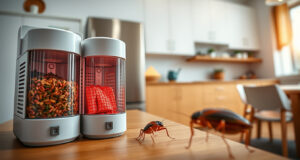
If you want to rid your home of cockroaches without using sprays or foggers, try an ultrasonic roach repellent. This small device plugs into the wall. It sends out high-frequency sound waves. The sound reaches roaches close by and makes them feel uneasy. The waves are too high for most people to hear. You may see fewer roaches when you use one.
This guide tells you what these devices do, their ups and downs, how to set them up, and how to pair them with other safe methods to cut roach numbers.
What Is an Ultrasonic Roach Repellent?
An ultrasonic roach repellent is a small electronic tool that sends high-frequency sound waves (above 20 kHz). The sound is meant to:
• Bug roaches and other pests
• Stay mostly unseen by humans
• Appear safe and free of chemicals
Manufacturers say the sound makes roaches leave. The sound may disturb their nerves or change how they talk to each other.
How It Works
- You plug the unit into an outlet.
- The unit sends out steady sound waves.
- Roaches find the sound hard to bear.
- They move to a quieter spot.
The draw is clear: no poisons, no mess, and no dead bugs for you to clean up. Still, the science is not so clear.
Do Ultrasonic Roach Repellents Really Work?
The work of these gadgets is a topic of debate. Some users see fewer roaches. Some see no change.
What Research and Experts Say
Tests and studies have mixed results:
• Some tests show little or no long-lasting change.
• The U.S. Federal Trade Commission has warned makers against claims that are not backed by proof.
• Experts in pest control do not use these devices as a main tool. They see them as a small extra help.
Roach behavior is not simple. Roaches can learn to stay near food and water. They may hide or get used to the sound instead of leaving.
When Users Report Success
Some people do see a change:
• Roaches show up less in some rooms.
• Roaches avoid certain spots like corners or cabinets.
• The number of roaches drops faster when the device is used with extra cleaning and sealing of cracks.
Often, the change comes from a mix of steps. Better cleaning and sealing cracks add to the effect of the device.
Pros and Cons of Ultrasonic Roach Repellents
Before you buy one, check what is good and what is not.
Advantages
• No toxic chemicals: no dangerous fumes or residues for you and your pets.
• Easy setup: plug it in and it works.
• Low upkeep: many models run for long periods with little care.
• Safe for families and most pets: these devices usually do not harm people, dogs, or cats.
Limitations
• Results change: each home may see a different effect.
• Small range: sound waves do not move well through walls or furniture.
• Not a single fix: on their own, they do not clear a heavy roach problem.
• Quality varies: many low-cost models make claims that may not be true.
Think of an ultrasonic roach repellent as one help in a set of safe tools—not as the only cure.
How to Use an Ultrasonic Roach Repellent Effectively
The place and use of the device matter a lot.
1. Pick the Right Device
Check for:
• A clear note of how much space it covers (for example, “up to 800 sq. ft.”)
• Safety stamps (such as CE, UL, or similar)
• A range of sounds (some change the frequency to keep roaches off)
• Real user reviews
Be wary of items that claim to clear all roaches in a very short time with no extra work.
2. Place It Smartly
Roaches like food, water, and a place to hide. Place your device:
• In kitchens near trash, below sinks, or by baseboards
• In bathrooms close to pipes or under a sink
• In damp spots like basements or laundry rooms
For good work:
• Plug it where nothing blocks the sound (no curtains or furniture in front).
• Do not hide it behind thick drapes or big objects.
• Use one device per room or open area. Hallways or doorways do not pass the sound well.
3. Let It Stay On
These devices are made to run all day and night:
• Keep it plugged in always. Turning it off may reduce its work.
• They use little power, like a small nightlight.
It may take days or weeks to see fewer roaches.

4. Watch and Change
Look for:
• A drop in roach visits or a shift in where they go
• New spots where they may gather
You might need to:
• Add more devices in hard-to-reach areas
• Change their position so the sound can reach well
Non-Chemical Methods to Use Along With Ultrasonic Devices
To wipe out roaches without chemicals, use many safe steps. The sound may push roaches out, but you must make your home less inviting.
1. Remove Food Sources
Roaches eat any crumbs.
• Keep food in sealed jars or boxes.
• Clean counters and tables after eating.
• Sweep or vacuum the kitchen each day until the problem is small.
• Clean trash cans frequently with bags that close well.
2. Cut Off Water
Roaches need water.
• Fix dripping taps or leaking pipes.
• Do not leave water in sinks, tubs, or pet bowls overnight.
• Use a dehumidifier in wet spots like basements or bathrooms.
3. Reduce Clutter
Roaches hide in dark, tight spaces.
• Throw away old boxes, papers, and bags.
• Keep items a few inches off the wall.
• Clear out the space under sinks and in pantries.
4. Seal Cracks and Gaps
Keep roaches out with firm blocks.
• Seal gaps near pipes, baseboards, and vents with caulk or foam.
• Add door sweeps to outside doors.
• Fix torn window screens and gaps near frames.
5. Set Traps
Safe traps can catch roaches.
• Glue traps along walls and behind appliances.
• Bottle traps with a bit of food like peanut butter or bread, coated with petroleum jelly
Check traps often. They show where roaches hide and if roach numbers drop. This plan works with the device: sound makes roaches move; traps catch them.
When to Ask a Professional
Sometimes, a safe home plan is not enough. Call help if you see:
• Roaches in the open almost every day.
• Black marks from roaches in many rooms.
• A strong musty smell in your home.
• No change after 4–6 weeks of trying safe steps and the device.
Many experts now give safe, balanced pest plans. They check your home, seal openings, clean up, and use focused tools that use fewer chemicals. Ask for plans that focus on safety if you worry about harsh chemicals.
Tips for Picking a Good Ultrasonic Roach Repellent
When many products are around, use these tips:
- Do not trust grand claims like “wipe out all roaches in 72 hours.”
- Check details: frequency, area of cover, and power use should be clear.
- Read reviews on different sites. Look for patterns, not just star scores.
- Buy one or two units first. Test them before buying more.
- Plan to use the device with cleaning, sealing, and traps instead of on its own.
Frequently Asked Questions About Ultrasonic Roach Repellents
1. Can an ultrasonic roach repellent truly clear cockroaches?
An ultrasonic device can cut down roach visits in some spots. It rarely clears all roaches. For the best work, use it with extra cleaning, sealing gaps, and safe traps. Think of the device as a helper that makes your home less neat for roaches.
2. Is it safe for pets and kids?
Many of these devices are safe for people, dogs, and cats since they use sound levels that are not high for humans. Small pets like hamsters and mice can be affected. Always check the label and avoid placing devices near small pet cages.
3. How can I get faster work from a roach repellent?
Place the devices in problem spots like the kitchen, bath, or basement. Keep them running all the time. At the same time:
• Remove food and water clues
• Cut off clutter and seal gaps
• Use sticky traps to catch roaches that leave their hideouts
This mix can help cut roach numbers faster without using sprays.
Bottom line: An ultrasonic roach repellent is a safe, simple tool that helps lower roach visits. It does not work alone. Use it with daily cleaning, sealing off gaps, and setting traps. With care and time, you can cut down roach numbers while keeping your home safe and clean.